
Can your older Pokémon cards still play? Check the printing, not just the name.
Regulation marks, reprints and event formats answer different questions. A simple checklist before you build a physical deck.
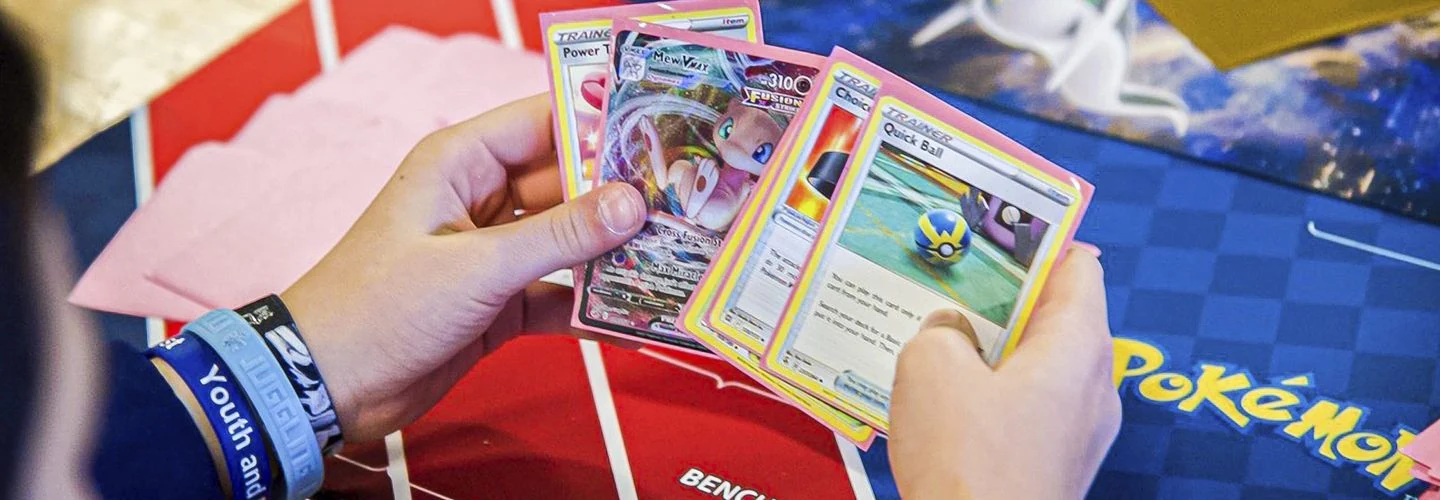
A familiar Trainer card can be a useful find in an old collection. It can also create an awkward surprise at a tournament if you assume that a matching name settles every legality question. Before buying replacements or bringing a deck to an event, check what game and format you are actually preparing for.
Start with the event’s format
Play! Pokémon identifies Standard as its most common format and explains that older cards leave it through rotation. Other ways to play exist, including alternative formats with their own rules. A card being outside Standard does not make it worthless as a collectible or unusable in every casual game; it means you need the right rules for the table.
Look for the regulation mark—and check reprints
The official rules portal explains that Standard rotation uses the letter regulation mark near the bottom-left corner of modern cards, introduced from 2020. It also says older cards, including versions without a mark, can remain eligible when reprinted with current regulation marks.
That is a reason to check the exact printing, not a blanket promise that any two cards sharing a name are interchangeable. The portal points to errata where wording has changed. For a specific older card, compare the official current ruling and any updated text; ask an event organiser or judge when the case remains unclear. This guide deliberately does not turn one season’s eligible letters into a permanent rule.
A playable list is more than a pile of eligible cards
Pokémon’s official introductory deckbuilding guide describes a physical deck of exactly 60 cards, including at least one Basic Pokémon, and a general four-copy limit apart from Basic Energy. Those construction checks are separate from whether each card belongs in your event’s format. Special card rules and current tournament requirements still need attention.
Before a local Australian event, confirm its format and bring the exact list you intend to use. Keep a note of any older printing you are relying on, rather than assuming a seller’s “playable” description is a ruling.
For product choices, our boosters versus singles guide starts with your collecting goal. For the separate mobile game, read the TCG Pocket update; a digital Pocket collection is not a physical tournament deck.
Sources & further reading
- Play! Pokémon — Competitive rules, regulation marks, reprints and errata resources ↗
- Pokémon — An introduction to physical deckbuilding ↗
References reviewed 30 Oct 2026 AEST.